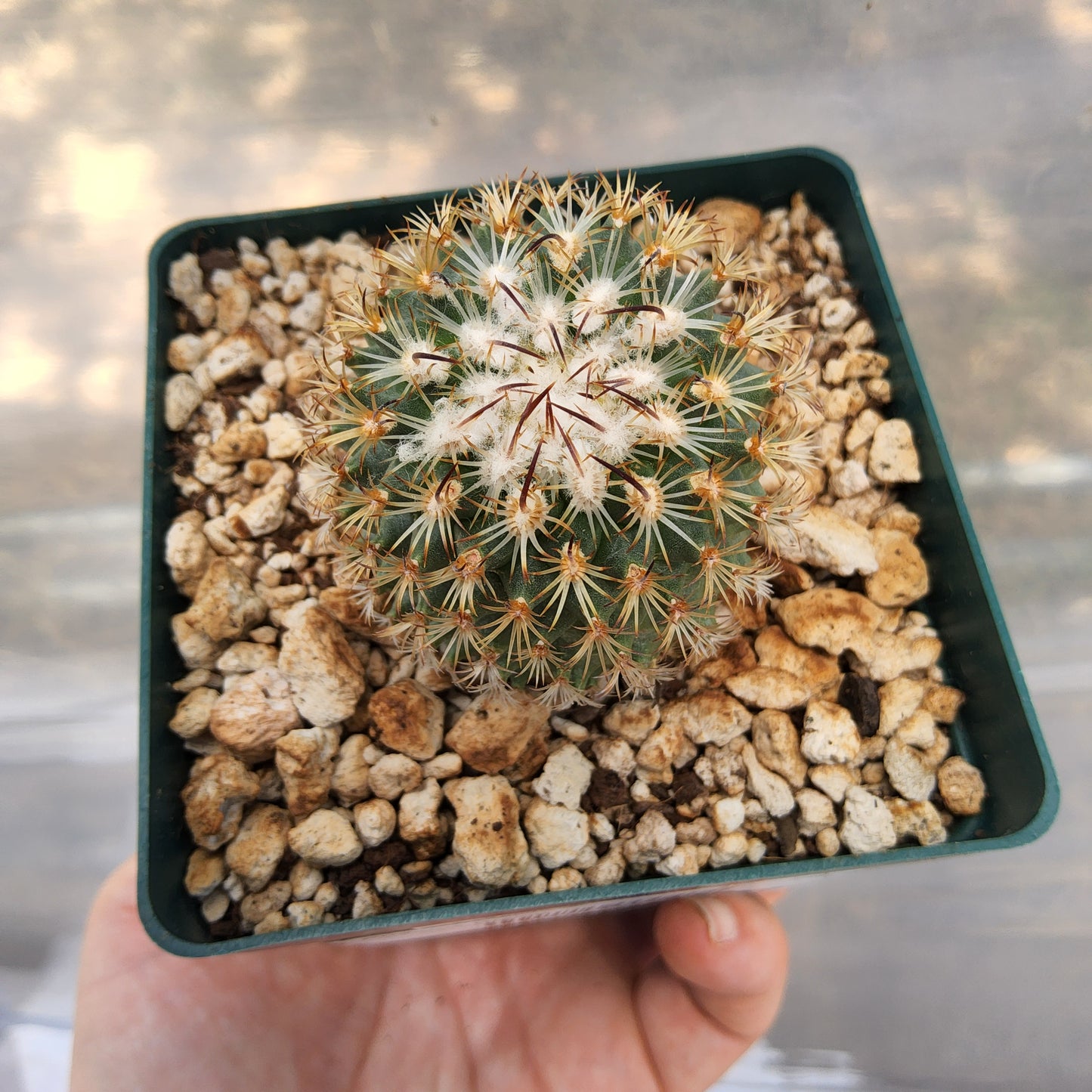
Turbinicarpus ysabelae | Collector Miniature Cactus | Endemic Mexican Cactus Growing in 4 Inch
Turbinicarpus ysabelae | Collector Miniature Cactus | Endemic Mexican Cactus Growing in 4 Inch
Couldn't load pickup availability
Turbinicarpus ysabelae is one of the most distinctive miniature cacti endemic to northeastern Mexico. Admired for its compact, symmetrical body, beautifully arranged tubercles, and fine white spination, this slow-growing species produces flowers that appear remarkably large in proportion to the plant itself. Its refined form and adaptation to harsh limestone habitats have earned it a respected place among collectors of miniature Mexican cacti.
Perfectly suited to long-term container cultivation, Turbinicarpus ysabelae thrives in a mineral-rich substrate and benefits from a cool, dry winter dormancy. With proper care, it develops into an elegant specimen that rewards patient growers with exceptional symmetry and reliable spring blooms.
Native Habitat:
Endemic to Tamaulipas, Mexico, where it is known from a small, highly localized population near Tula, close to the border with San Luis Potosí. It grows on exposed limestone hillsides and calcareous outcrops in shallow, rocky mineral soils at elevations of approximately 1,200–1,500 meters (3,900–4,900 feet). Plants are typically found nestled among limestone gravel and sparse desert vegetation, where they experience intense sunlight, seasonal summer monsoon rainfall, cool dry winters, and extended periods of drought. Its naturally restricted distribution makes habitat conservation especially important for the long-term survival of wild populations.
Flowering Information:
Mature plants produce delicate white to pale pink flowers, frequently accented by darker pink to magenta midstripes and contrasting yellow stamens. Blooming occurs primarily during spring, with healthy specimens occasionally flowering again following favorable summer rains.
Soil Type:
Requires an exceptionally fast-draining mineral cactus mix consisting of pumice, crushed limestone, coarse sand, decomposed granite, and fine gravel, with very little organic matter. Excellent drainage is essential for maintaining a healthy taproot and preventing root rot.
Hardiness:
USDA Zones 8–11. Established plants can tolerate brief temperatures down to approximately 20°F (-6°C) when kept completely dry. Protect from prolonged freezing temperatures and excessive winter moisture.
Light Requirements:
Thrives in full sun to bright filtered light with excellent air circulation. Strong light promotes compact growth, dense spine development, and abundant flowering. In regions with extremely intense summer heat, light afternoon shade can help prevent stress while maintaining excellent plant form.
Propagation:
Primarily propagated from seed, producing plants with strong taproots and excellent natural form. Because of its slow growth, seedlings are occasionally grafted to accelerate development, although own-root plants are generally preferred by collectors for their natural appearance, longevity, and long-term stability.
Collector's Note:
Turbinicarpus ysabelae was described as a distinct species based on its unique morphology and highly restricted distribution in southern Tamaulipas. While many cactus specialists and collectors continue to recognize it as a separate species, some modern taxonomic authorities, including Royal Botanic Gardens, Kew, have treated it as part of the Turbinicarpus saueri complex. Regardless of taxonomic interpretation, its compact size, refined spination, localized habitat, and beautiful flowers have established it as one of the most desirable members of the genus. For collectors of miniature Mexican cacti, it represents an outstanding example of the remarkable diversity that has evolved on the limestone landscapes of northeastern Mexico.
This is for one plant similar to the one shown growing in a 4" inch container shipped bare root. All of our plants are guaranteed pest-free and healthy upon delivery, and we ship within the United States. Shipping is done Monday thru Friday.
Any questions please ask.
#prsucculents
Share