Trichodiadema intonsum (Trichodiadema bulbosum) | African Bonsai | Caudiciform Succulent
Trichodiadema intonsum (Trichodiadema bulbosum) | African Bonsai | Caudiciform Succulent
Couldn't load pickup availability
Trichodiadema bulbosum, now botanically accepted as Trichodiadema intonsum, is a distinctive South African caudiciform succulent commonly known as the African Bonsai or Miniature Desert Rose. It is highly prized for its thickened, sculptural root system, finely branched stems, miniature succulent foliage, and vibrant daisy-like flowers.
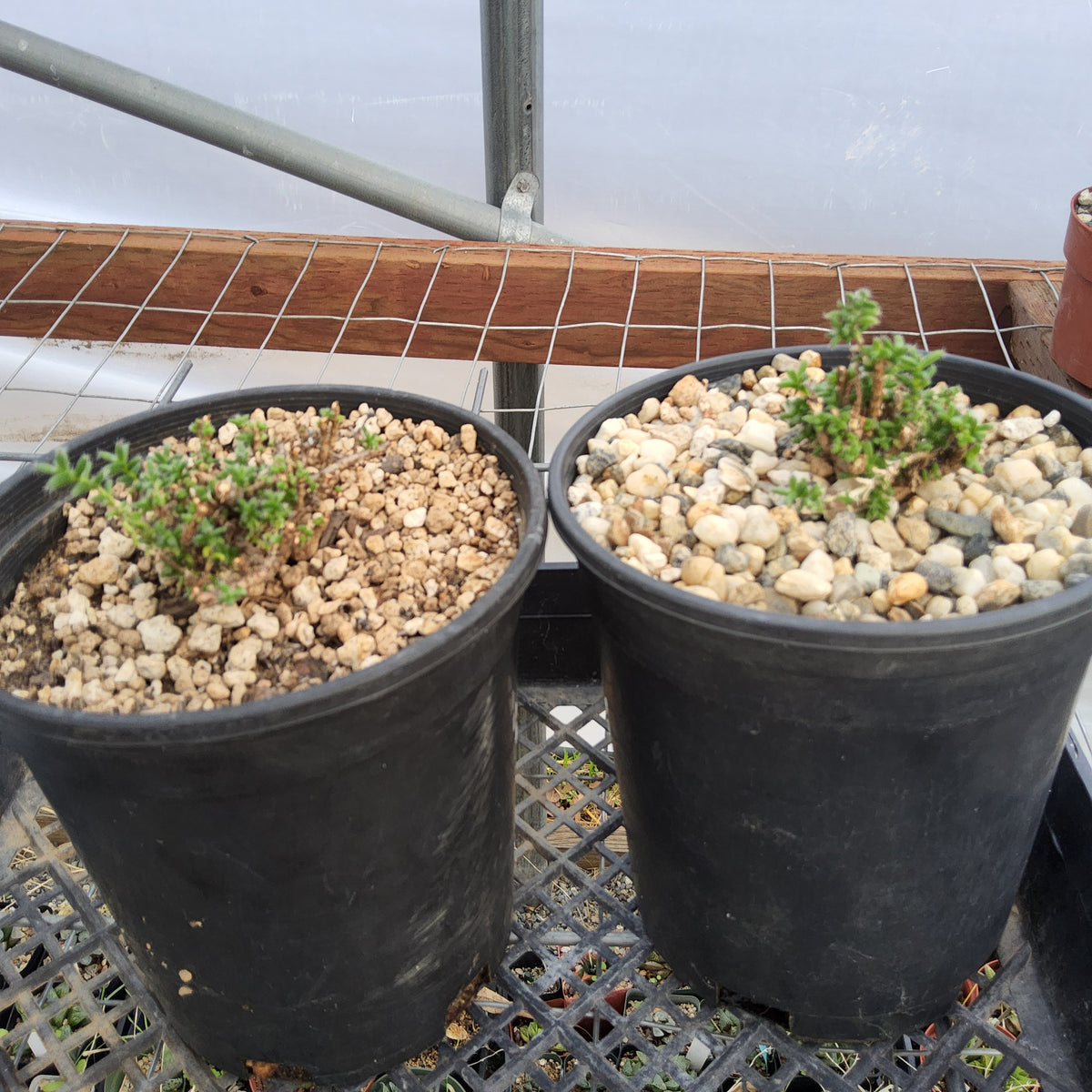
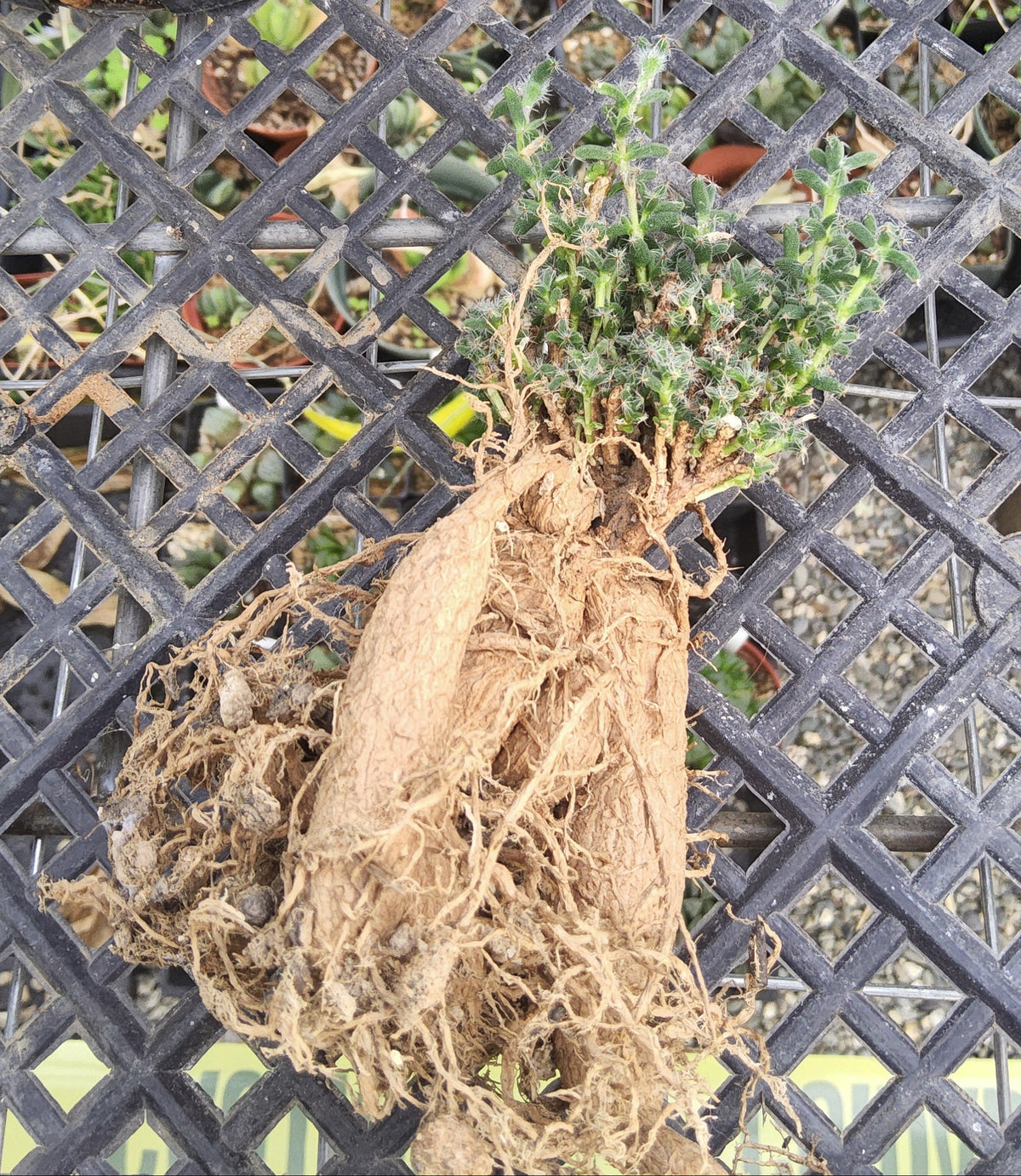
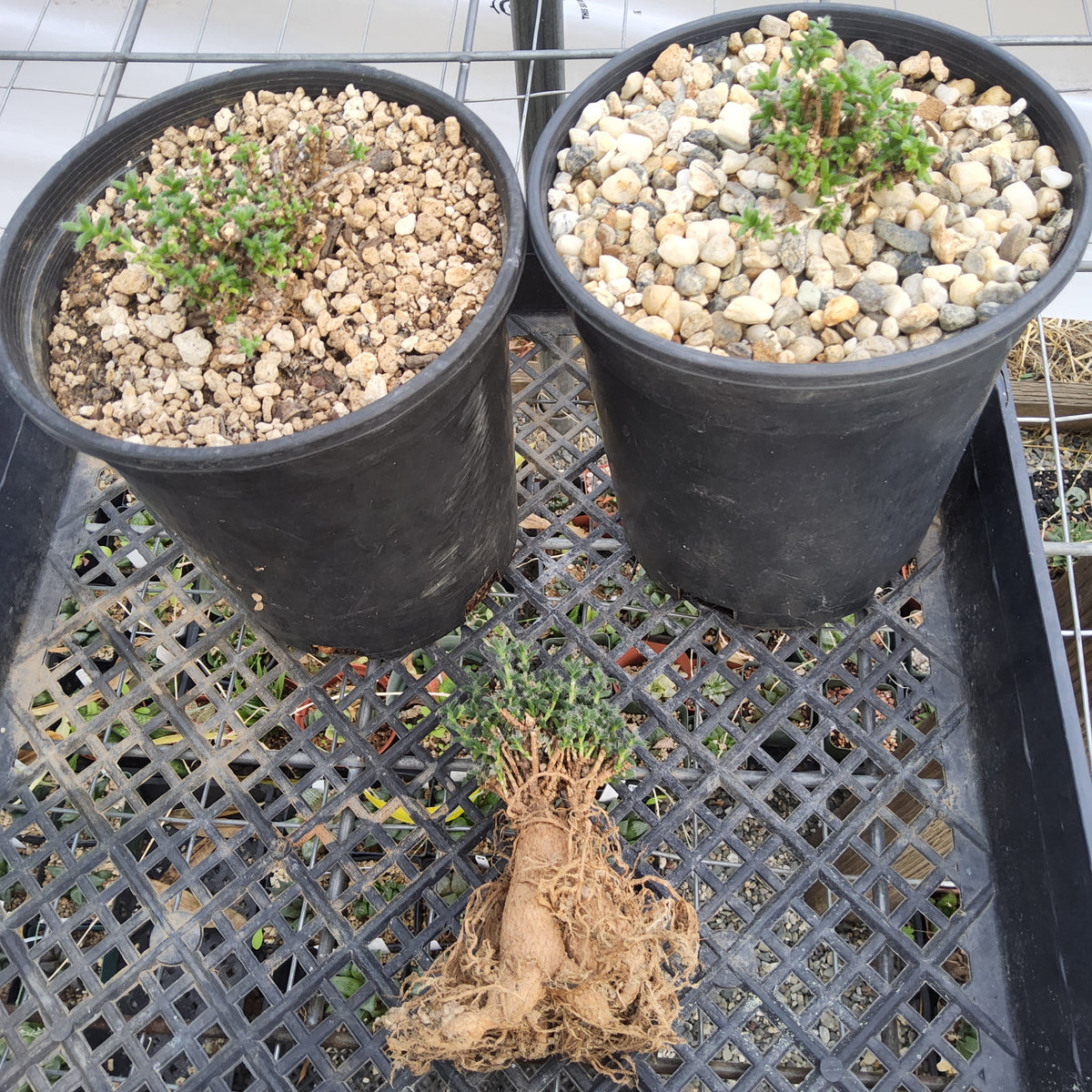
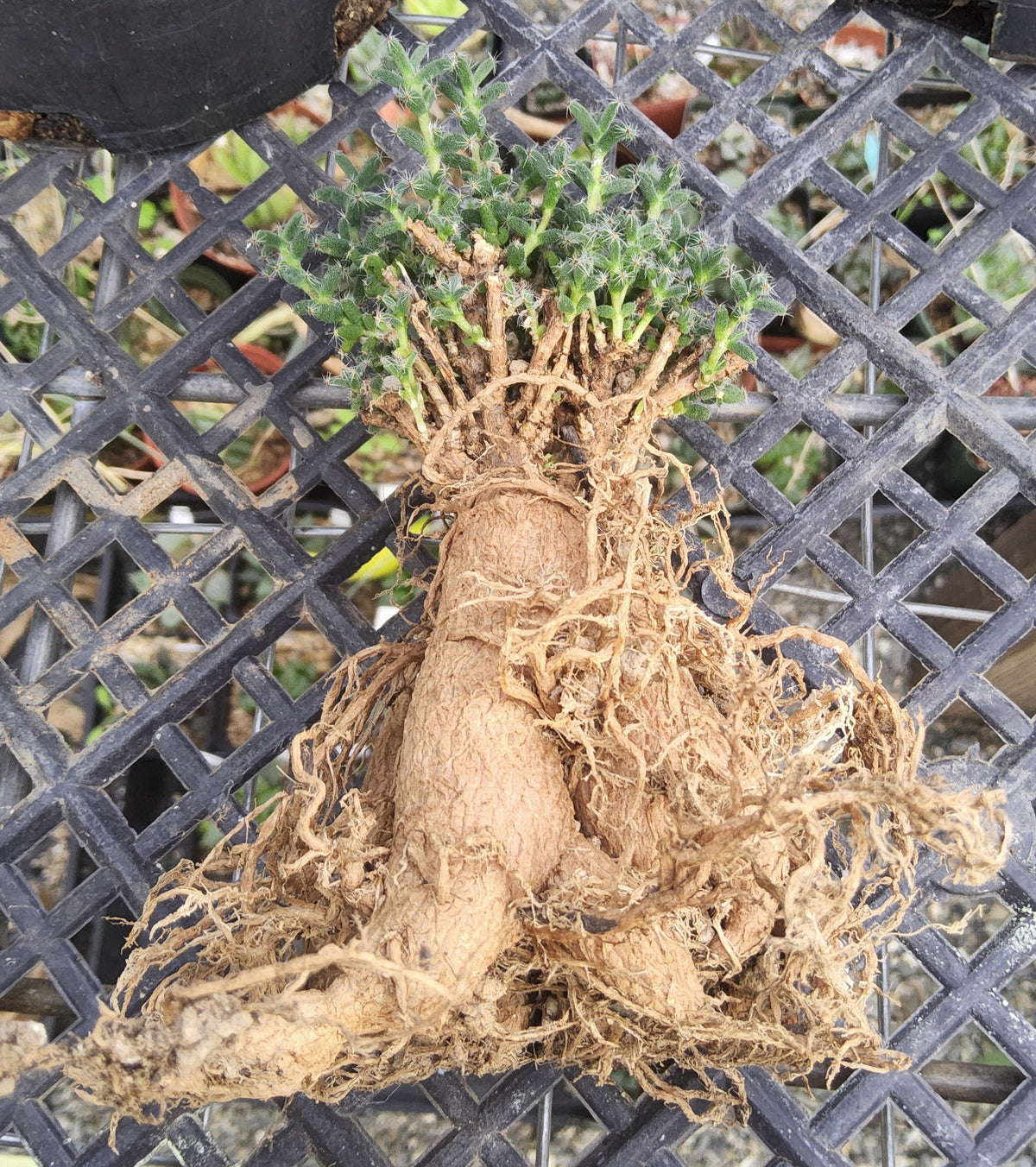
Plants develop numerous slender, woody branches bearing small, cylindrical green to gray-green leaves approximately 6–13 mm long, each tipped with a crown of fine bristles. Mature specimens typically form low, spreading shrubs approximately 15–30 cm (6–12 inches) tall. Over time, the enlarged underground storage roots can develop into an impressive caudiciform structure reaching 20 cm (8 inches) or more across. These roots can be gradually exposed during repotting to create a striking miniature tree-like appearance, making this species particularly desirable for succulent bonsai cultivation.
Native Habitat:
Trichodiadema intonsum is native to the Eastern Cape Province of South Africa, with documented populations around Gqeberha (formerly Port Elizabeth), Kariega (formerly Uitenhage), and the Swartkops and Sundays River regions.
Plants historically identified as Trichodiadema bulbosum have been documented growing on flats and hills composed of Karoo-derived shale and siltstone, while other populations included within T. intonsum occur on river flats.
The species inhabits relatively dry environments where its small succulent leaves and substantial underground storage roots allow it to withstand periods of limited rainfall. The roots naturally develop primarily beneath the soil surface, unlike the exposed caudiciform presentation commonly seen in cultivation.
Flowering Information:
Mature plants produce numerous attractive, daisy-like flowers approximately 2 cm (0.8 inches) across, typically ranging from bright pink and magenta to violet-purple, often surrounding a contrasting yellow-green or pale center. White-flowered forms have also been documented within the species.
Flowering generally occurs from spring through summer, with additional blooms possible into autumn under favorable cultivation conditions.
The flowers are hermaphroditic and open most fully under bright sunlight. Following successful pollination, plants develop five-chambered seed capsules.
Soil Type:
Grow in a fast-draining succulent substrate consisting of pumice, lava rock, decomposed granite, coarse grit, and a moderate proportion of organic material.
Water thoroughly during active growth, allowing the substrate to dry between waterings. Although the enlarged storage roots provide considerable drought tolerance, regular watering during favorable growing conditions encourages root development, branching, and flowering.
Young plants benefit from being grown with their storage roots buried beneath the substrate for several years. This encourages the development of a larger root system before it is gradually exposed for ornamental display.
Reduce watering during cold winter conditions and avoid prolonged saturation, which can lead to root rot.
Hardiness:
Suitable for approximately USDA Zones 9b–11, with protection recommended during prolonged freezing conditions.
Established plants can tolerate brief temperatures around 25°F (-4°C), particularly when grown in well-draining soil. Cultivation in Zone 9a may be possible in protected microclimates.
Specimens with exposed storage roots are more vulnerable to freezing damage than plants whose roots remain protected beneath the soil surface.
Container-grown bonsai specimens should be protected during significant or prolonged freezes.
Light Requirements:
Provide bright light to full sun, with some afternoon protection in extremely hot inland climates.
Strong light encourages compact foliage, shorter internodes, and abundant flowering. Plants grown in excessive shade may develop elongated branches and flower less frequently.
When raising previously buried storage roots above the soil surface, gradually acclimate them to direct sunlight to reduce the possibility of sunburn.
Propagation:
Propagation is readily accomplished from seed or stem cuttings.
Both methods produce enlarged storage roots, although the resulting structures often differ considerably.
-
Seed-grown plants generally develop a more centralized, enlarged taproots
-
Cutting-grown plants typically develop multiple thickened, branching storage roots, which can produce particularly attractive sculptural forms for bonsai cultivation.
Stem cuttings can be rooted in a lightly moist, well-draining propagation medium during active growth.
Allowing the storage roots to develop underground for several years before gradually exposing them will generally produce more substantial specimens. Selective pruning of the upper branches encourages compact growth and helps maintain the desired miniature tree-like appearance.
Collector's Note:
The species was originally described by English botanist Adrian Hardy Haworth in 1824, under the names Mesembryanthemum intonsum and Mesembryanthemum bulbosum.
German botanist Gustav Schwantes transferred both names to the genus Trichodiadema in 1926.
Following subsequent taxonomic revisions, Kew's Plants of the World Online currently accepts Trichodiadema intonsum, with Trichodiadema bulbosum and Trichodiadema concinnum treated as synonyms. The name Trichodiadema bulbosum nevertheless remains widely recognized among succulent and bonsai collectors.
The genus name Trichodiadema is derived from the Greek words for hair and crown, referring to the distinctive crown of bristles at the tip of each leaf. The historical specific epithet bulbosum refers to its enlarged underground storage structure.
Its ability to develop substantial storage roots from both seed and cuttings, combined with its fine branching, miniature foliage, and colorful flowers, makes it an exceptionally suitable species for succulent bonsai, root-over-rock arrangements, and caudiciform collections.
This is for one plant similar to the one shown shipped bare root. All of our plants are guaranteed pest-free and healthy upon delivery, and we ship within the United States. Shipping is done Monday thru Friday.
Any questions please ask.
#prsucculents
Share