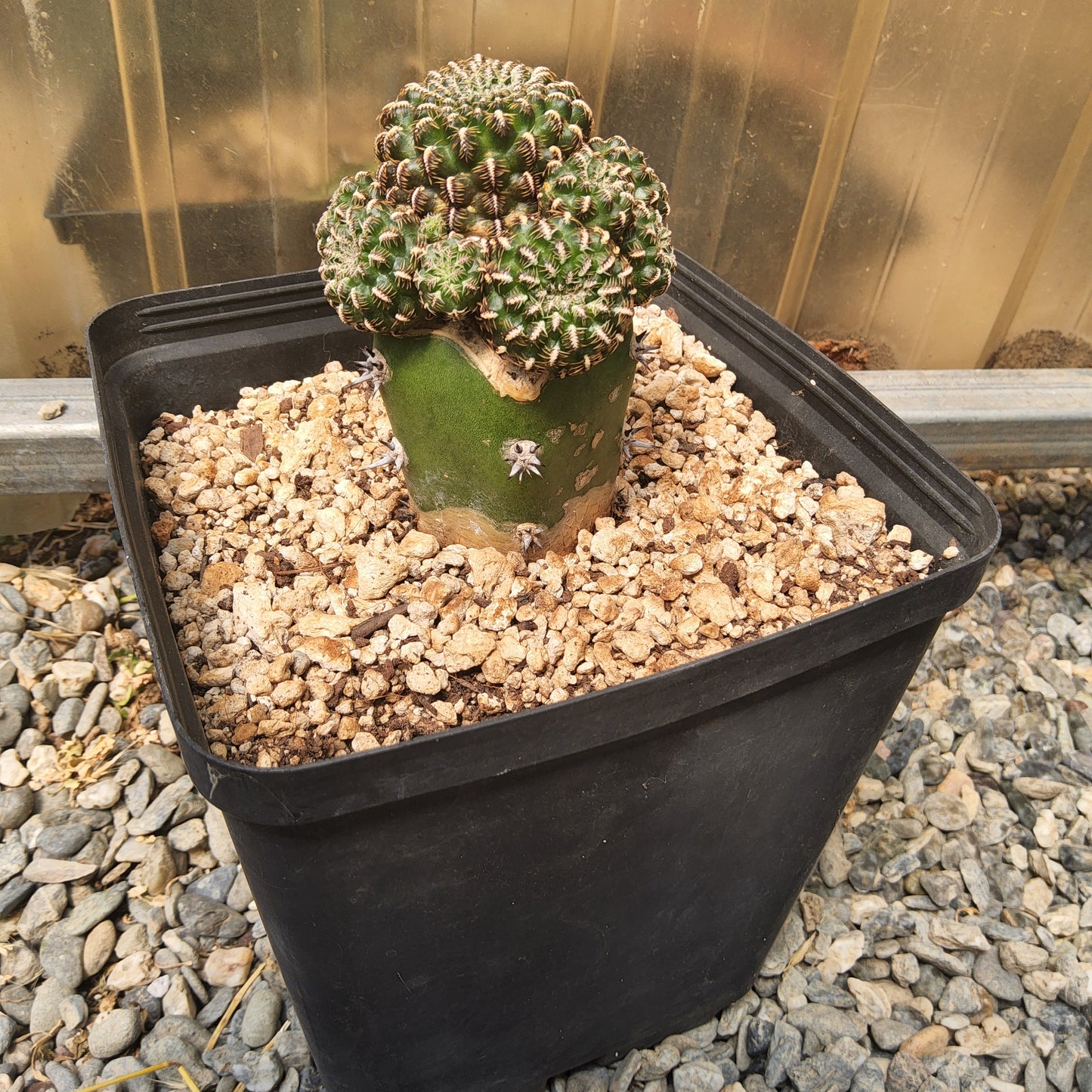
Sulcorebutia canigueralii EM 348 | SO Sucre–Yamparáez, Bolivia | Collector Cactus Grafted in a Gallon - Exact Plant
Sulcorebutia canigueralii EM 348 | SO Sucre–Yamparáez, Bolivia | Collector Cactus Grafted in a Gallon - Exact Plant
Couldn't load pickup availability
Sulcorebutia canigueralii EM 348 is a beautiful, field-numbered collection representing a documented wild population from the mountains southeast of Sucre, Chuquisaca, Bolivia. Highly regarded by collectors for its compact growth, neatly arranged tubercles, fine comb-like spination, and brilliant flowers, this high-elevation cactus gradually develops into attractive multi-headed clusters through the production of basal offsets. Its documented provenance and locality-specific identity make EM 348 especially desirable for collectors who appreciate plants with a known origin.
Like many members of the former genus Sulcorebutia, this species combines exceptional beauty with remarkable resilience. Its compact body, substantial taproot, and brilliant spring flowers are all adaptations to the demanding mountain environment where it evolved.
Native Habitat:
The EM 348 accession originates from approximately 24 kilometers (15 miles) southeast of Sucre on the road toward Yamparáez, Chuquisaca Department, Bolivia, at an elevation of approximately 3,150 meters (10,335 feet). This region lies within Bolivia's inter-Andean valleys, where plants grow in shallow, exceptionally well-drained mineral soils under intense sunlight, cool nights, and a strongly seasonal climate. Annual rainfall is concentrated during the summer months, followed by a cool, dry winter that allows the plants to rest before resuming growth with the return of seasonal moisture. These conditions have produced compact, slow-growing plants with robust taproots that efficiently store water and anchor the plant in thin mountain soils. This specimen is grafted to help increase the growth speed.
Flowering Information:
Mature plants bloom during spring to early summer, producing striking red to magenta flowers that often appear nearly as large as the plant itself. Like nearly all members of the cactus family (Cactaceae), the flowers are hermaphroditic, possessing both functional stamens and a pistil within each flower. Cross-pollination between genetically distinct plants is recommended for the best seed production and helps preserve the genetic diversity of this documented locality collection.
Soil Type:
Grow in a sharply draining mineral substrate consisting primarily of pumice, coarse grit, decomposed granite, or similar mineral aggregates, with only a small amount of organic material. A deeper pot than the plant's size might suggest is beneficial, allowing the strong taproot to develop naturally. Excellent drainage is essential throughout the year, particularly around the root neck.
Hardiness:
Best suited to USDA Zones 8–10 when grown outdoors. Mature plants tolerate brief periods of light frost if kept completely dry, but prolonged freezing temperatures and cold, wet soil can quickly damage the root system. In climates with wet winters, frost-free protection is recommended. Providing a cool, dry winter dormancy promotes compact growth, healthy roots, and dependable flowering.
Light Requirements:
Thrives in bright light with several hours of direct sun each day. Strong light encourages compact growth, healthy spine development, and abundant flowering. In regions with extremely hot summers, light afternoon shade helps prevent excessive stress while maintaining excellent form.
Propagation:
Primarily propagated from seed, preserving the natural diversity of the EM 348 population and producing plants with strong, well-developed taproots. Mature specimens may also produce basal offsets, which can be removed and rooted successfully after reaching adequate size. Offset propagation produces genetically identical plants, while seed-grown plants preserve the natural genetic diversity of this documented locality. This species does not develop a caudex; its enlarged taproot is a normal adaptation for water storage and survival in its native mountain habitat.
Collector's Note:
The field designation EM 348 identifies a documented locality approximately 24 kilometers southeast of Sucre on the road toward Yamparáez at an elevation of 3,150 meters. This locality has remained consistent in specialist European nursery records for many years and matches the provenance associated with this collection. Although the exact identity of the collector represented by the initials EM and the original collection year have not yet been confirmed, the locality itself is well documented.
Originally described within Rebutia, the species has long been cultivated under the name Sulcorebutia canigueralii, which remains the preferred name among collectors. Modern taxonomic authorities currently place the species within Weingartia, reflecting ongoing research into relationships within this fascinating group of Bolivian mountain cacti. Regardless of the classification followed, EM 348 represents a beautiful, well-documented locality collection that preserves the unique characteristics of one of Bolivia's most admired high-elevation cactus populations.
Any questions please ask.
#prsucculents
Share