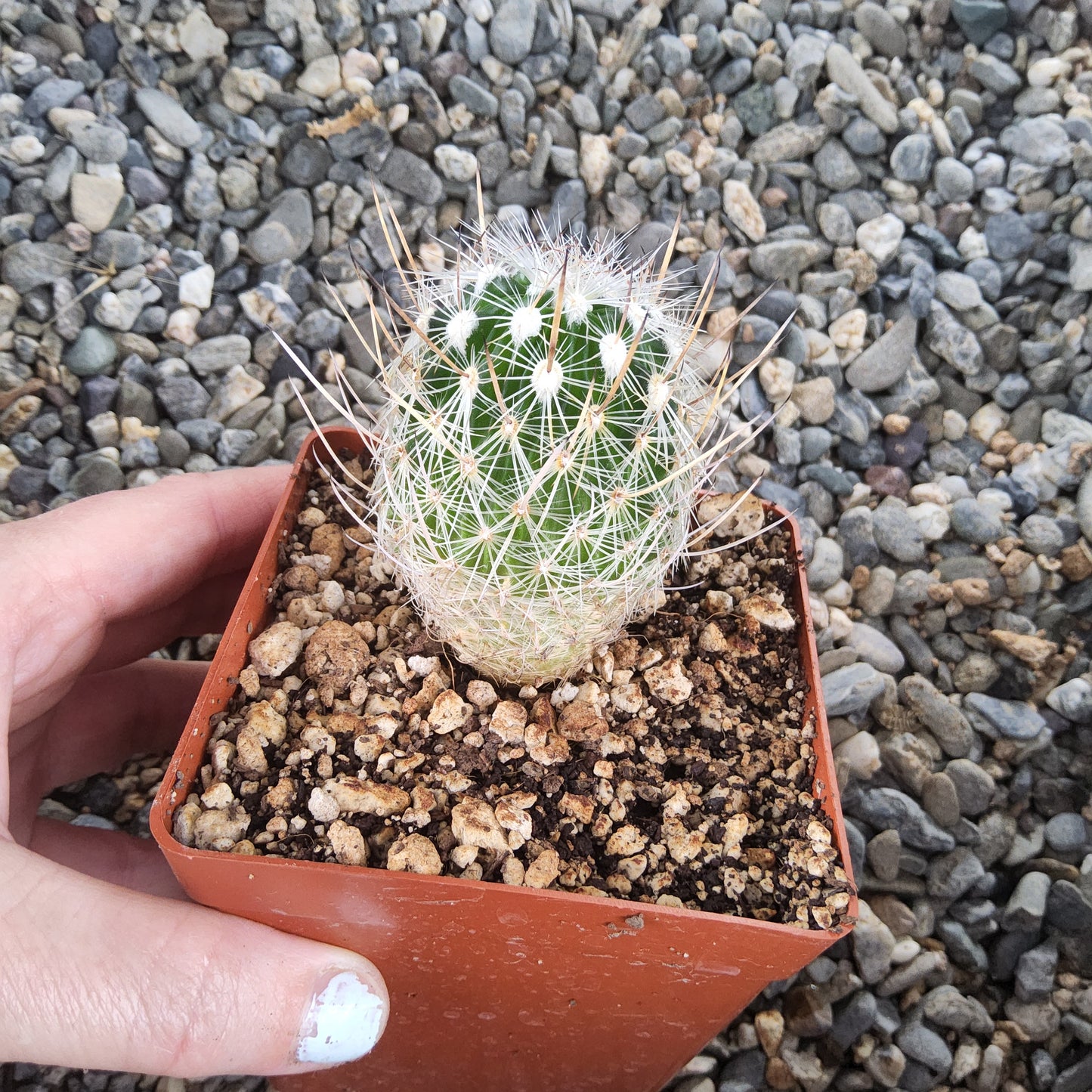
Stenocactus multicostatus f. lloydii | Long-Spined Brain Cactus | Mexican Collector Cactus
Stenocactus multicostatus f. lloydii | Long-Spined Brain Cactus | Mexican Collector Cactus
Couldn't load pickup availability
Stenocactus multicostatus f. lloydii is a distinctive long-spined form of the remarkably variable Stenocactus multicostatus, prized for its intricate maze of tightly folded ribs and dramatic papery spination. The globose to slightly cylindrical stem may develop dozens of extremely narrow, undulating ribs, giving mature specimens the remarkable folded appearance that has earned the species common names such as Brain Cactus and Wave Cactus.
The form traditionally known as lloydii is especially notable for its elongated, flattened spines, which may range from creamy white and pale gray to reddish-brown or deep red. These prominent spines arch across the heavily ribbed body and give the plant a considerably different appearance from many more typical forms of Stenocactus multicostatus. Combined with its early spring flowers and highly architectural growth, this makes f. lloydii an outstanding selection for collectors interested in naturally variable Mexican cacti.
Native Habitat:
Stenocactus multicostatus is native to the dry uplands of northern and northeastern Mexico, with populations historically associated with the lloydii form occurring particularly in Coahuila, Chihuahua, and Durango. Plants inhabit rocky grasslands, gravelly plains, open slopes, and dry upland meadows, where they often grow low among stones and sparse xerophytic vegetation.
These habitats experience strong sunlight, seasonal summer rainfall, cool dry winters, and substantial fluctuations between daytime and nighttime temperatures. The numerous narrow ribs allow the plant body to expand rapidly after rainfall and contract considerably during drought.
The surrounding xerophytic flora can be exceptionally diverse. In documented Stenocactus multicostatus habitat in Coahuila, associated cacti and succulents include Echinocactus horizonthalonius, Lophophora williamsii, Thelocactus bicolor, Neolloydia conoidea, Echinocereus stramineus, and Astrophytum capricorne, creating a rich assemblage of specialized Chihuahuan Desert plants.
Flowering Information:
Stenocactus multicostatus f. lloydii typically begins flowering in late winter to early spring, often making it one of the first Mexican cacti in a collection to bloom as temperatures begin to rise.
Flowers emerge from the crown and range from white and pale pink to lavender or light purple, usually displaying a prominent violet to deep purple midstripe along each tepal. The flowers often appear nestled among the long upper spines, creating an attractive contrast between the delicate blossoms and the heavily armored body.
The flowers are hermaphroditic, containing functional stamens and a functional pistil.
Soil Type:
Grow in a sharply draining, predominantly mineral substrate consisting of pumice, coarse grit, decomposed granite, coarse sand, and a modest amount of organic material.
The species is relatively adaptable compared with some highly specialized Mexican cacti, but prolonged moisture around the root system should be avoided. Allow the substrate to dry well between waterings and keep the plant substantially drier during cool winter conditions.
Hardiness:
Best suited to approximately USDA Zones 9–11. Established plants can tolerate brief temperatures around 23°F (-5°C), and potentially somewhat lower when completely dry, but prolonged freezes and cold, wet soil should be avoided.
A cool, dry winter dormancy encourages healthy compact growth and helps stimulate the abundant early-season flowering for which the species is known.
Light Requirements:
Thrives in bright light with several hours of direct sun each day. Strong illumination promotes compact growth, dense spination, and dependable flowering.
In exceptionally hot climates, some light afternoon shade can prevent excessive heat stress while still providing enough sunlight to maintain the plant's natural form and spine coloration.
Propagation:
Propagation is primarily from seed, which is particularly rewarding in this species because seedlings can display considerable natural variation in rib number, spine length, and spine coloration.
Older plants may occasionally produce basal shoots that can be separated and rooted, but offset production is inconsistent. Seed remains the preferred method for producing naturally proportioned specimens and maintaining the diversity characteristic of the Stenocactus multicostatus complex.
Collector's Note:
The plant historically known as Stenocactus lloydii was originally described by Nathaniel Lord Britton and Joseph Nelson Rose in 1922 as Echinofossulocactus lloydii. It was subsequently transferred to the genus Stenocactus, and the name Stenocactus lloydii became firmly established among cactus collectors.
The epithet lloydii honors botanist and desert-plant researcher Francis Ernest Lloyd (1868–1947), whose extensive studies of xerophytic plants included botanical fieldwork in Mexico and the deserts of southwestern North America.
Modern taxonomy takes a broader view of these plants. Kew's Plants of the World Online currently places Stenocactus lloydii within the accepted Stenocactus multicostatus ssp. multicostatus, reflecting the extensive natural variation and morphological intermediates found throughout the species.
For horticultural purposes, we retain the designation Stenocactus multicostatus f. lloydii for plants displaying the characteristic long, flattened, often papery spines historically associated with lloydii. This form name is especially useful because it communicates a recognizable phenotype that would otherwise be lost under the much broader name Stenocactus multicostatus.
This is for one plant similar to the one shown growing in a 4" inch container shipped bare root. All of our plants are guaranteed pest-free and healthy upon delivery, and we ship within the United States. Shipping is done Monday thru Friday.
Any questions please ask.
#prsucculents
Share