Kadenicarpus horripilus | Turbinicarpus horripilus | Metztitlán, Hidalgo Collector Cactus
Kadenicarpus horripilus | Turbinicarpus horripilus | Metztitlán, Hidalgo Collector Cactus
Couldn't load pickup availability
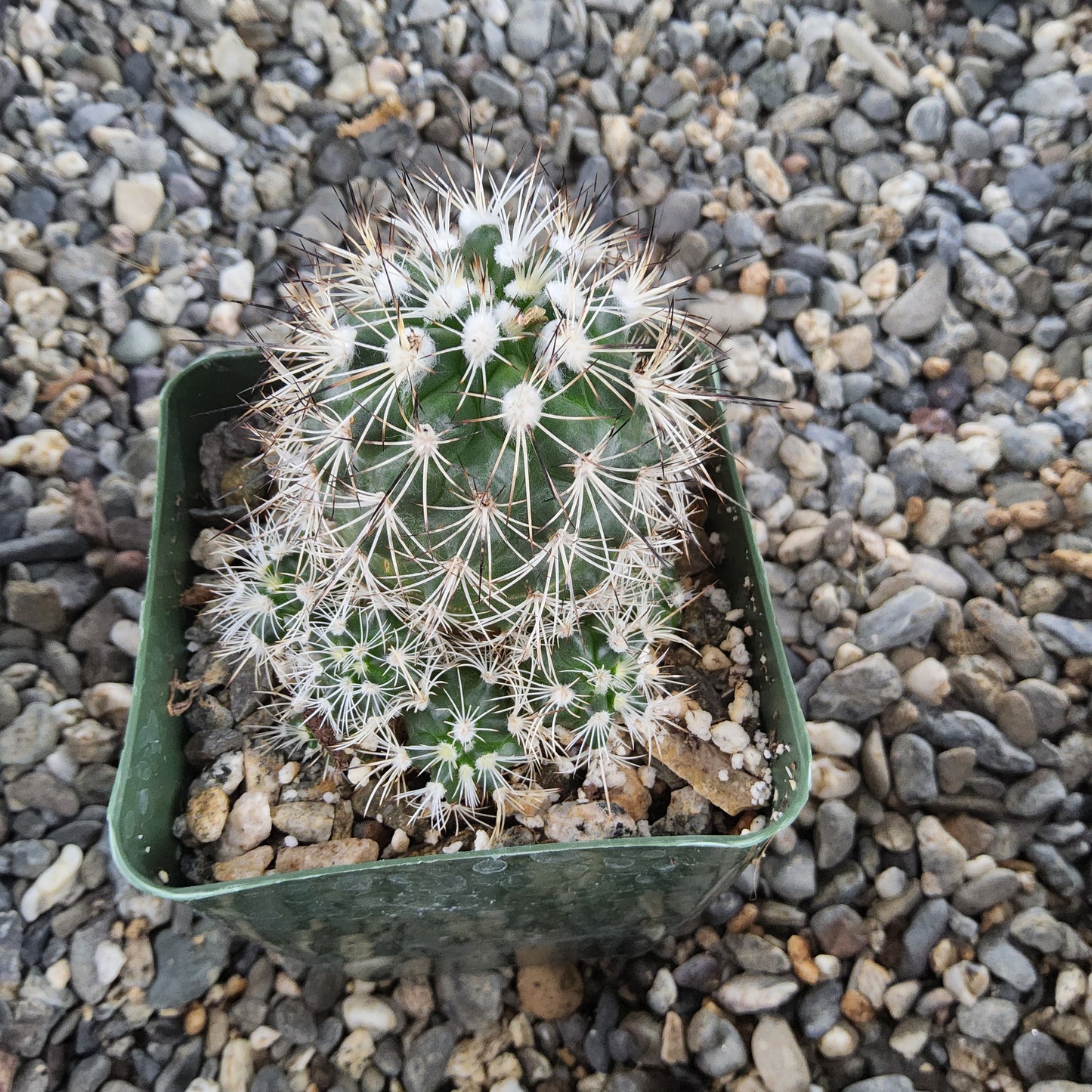
Kadenicarpus horripilus, still widely known among collectors as Turbinicarpus horripilus, is a distinctive Mexican cactus admired for its blue-green to olive-green body, prominent woolly apex, formidable dark-tipped spines, and brilliant purple flowers. Young plants begin globose but may gradually become short-columnar with age, while mature specimens can occasionally produce basal branches and develop into impressive multiheaded plants.
The spination is particularly striking. Numerous white to gray radial spines surround one or two stronger central spines that emerge dark brown to nearly black at the tips before weathering paler with age. Against the woolly crown and subdued green epidermis, the large purple flowers create an exceptional contrast during the flowering season.
Native Habitat:
The plants traditionally known as Turbinicarpus horripilus are especially associated with the Barranca de Metztitlán in Hidalgo, Mexico, where documented populations occur around Metztitlán and neighboring localities at approximately 1,200–1,500 meters (3,940–4,920 feet) elevation.
Plants inhabit steep calcareous slopes, rocky crevices, and exposed limestone-derived terrain within xerophytic and semi-desert scrub. They often establish in small pockets of mineral soil between rocks, where rapid drainage and strong sunlight alternate with seasonal periods of moisture.
The surrounding xerophytic flora is exceptionally rich. Cacti and succulents documented from the same general habitat include Astrophytum ornatum, Mammillaria geminispina, Mammillaria candida, Cephalocereus senilis, Myrtillocactus geometrizans, Stenocereus dumortieri, Opuntia durangensis, Agave stricta, and Agave salmiana. These species create one of central Mexico’s most remarkable cactus-dominated landscapes.
Flowering Information:
Mature plants produce striking deep magenta, violet-purple, or purplish-red flowers, usually with a noticeably paler or whitish throat. Flowers may reach approximately 4 cm (1.6 inches) across and open during the day.
Although spring and early summer are important flowering periods in cultivation, studies of wild populations in the Barranca de Metztitlán have documented flower and fruit production through much of the year, with peak reproductive activity occurring during the region’s dry season.
The flowers are hermaphroditic and are primarily bee-pollinated.
Soil Type:
Grow in an exceptionally porous, predominantly mineral substrate composed of pumice, coarse limestone gravel, decomposed granite, coarse grit, and only a small amount of organic material.
Excellent drainage and strong root-zone aeration are essential. Avoid rich or moisture-retentive soil, which can encourage unnaturally elongated growth and increase the risk of root rot. Allow the substrate to dry well between waterings.
Hardiness:
Best suited to approximately USDA Zones 9–11. Established plants can tolerate brief temperatures around 25°F (-4°C) when completely dry, but prolonged freezing conditions and cold, wet soil should be avoided.
Provide a cool, dry winter rest, particularly whenever nighttime temperatures remain consistently below about 50°F (10°C). Good air circulation is important throughout the year.
Light Requirements:
Thrives in bright light to strong sun. Ample light encourages compact growth, strong spine development, and dependable flowering.
Plants grown under greenhouse conditions should be gradually acclimated before exposure to intense outdoor sun. In very hot climates, some afternoon protection can help prevent stress while still maintaining the species’ characteristic compact form and robust spination.
Propagation:
Propagation is primarily from seed, which is the most dependable method and preserves genetic variation within cultivated populations.
Grafting can be used to accelerate growth and flowering, but seed-grown plants maintained on their own roots generally develop the most natural proportions and are preferred by many collectors.
Collector's Note:
This cactus has had an exceptionally complicated taxonomic history. It was originally described by Charles Lemaire in 1838 as Mammillaria horripila and has subsequently been placed in numerous genera, including Echinocactus, Neolloydia, Gymnocactus, Thelocactus, Pediocactus, Turbinicarpus, and Bravocactus.
The familiar combination Turbinicarpus horripilus was published in 1983 and became firmly established in horticulture. However, a major molecular and morphological study published in 2019 demonstrated that Turbinicarpus in its traditional broad sense was polyphyletic. The study recovered Kadenicarpus, Rapicactus, and Turbinicarpus as separate evolutionary lineages, and the species was consequently transferred to Kadenicarpus horripilus.
Kew’s Plants of the World Online currently accepts Kadenicarpus horripilus as the correct botanical name and treats Turbinicarpus horripilus as a synonym.
The classic Metztitlán populations are particularly significant from a conservation standpoint. Population studies have documented localized, fragmented colonies with low seedling recruitment, while illegal collection has historically placed additional pressure on wild plants. Cultivated, seed-grown material therefore plays an important role in keeping this remarkable Mexican cactus available to collectors without impacting natural populations.
This is for one plant similar to the one shown growing in a 4" inch container shipped bare root. All of our plants are guaranteed pest-free and healthy upon delivery, and we ship within the United States. Shipping is done Monday thru Friday.
Any questions please ask.
#prsucculents
Share