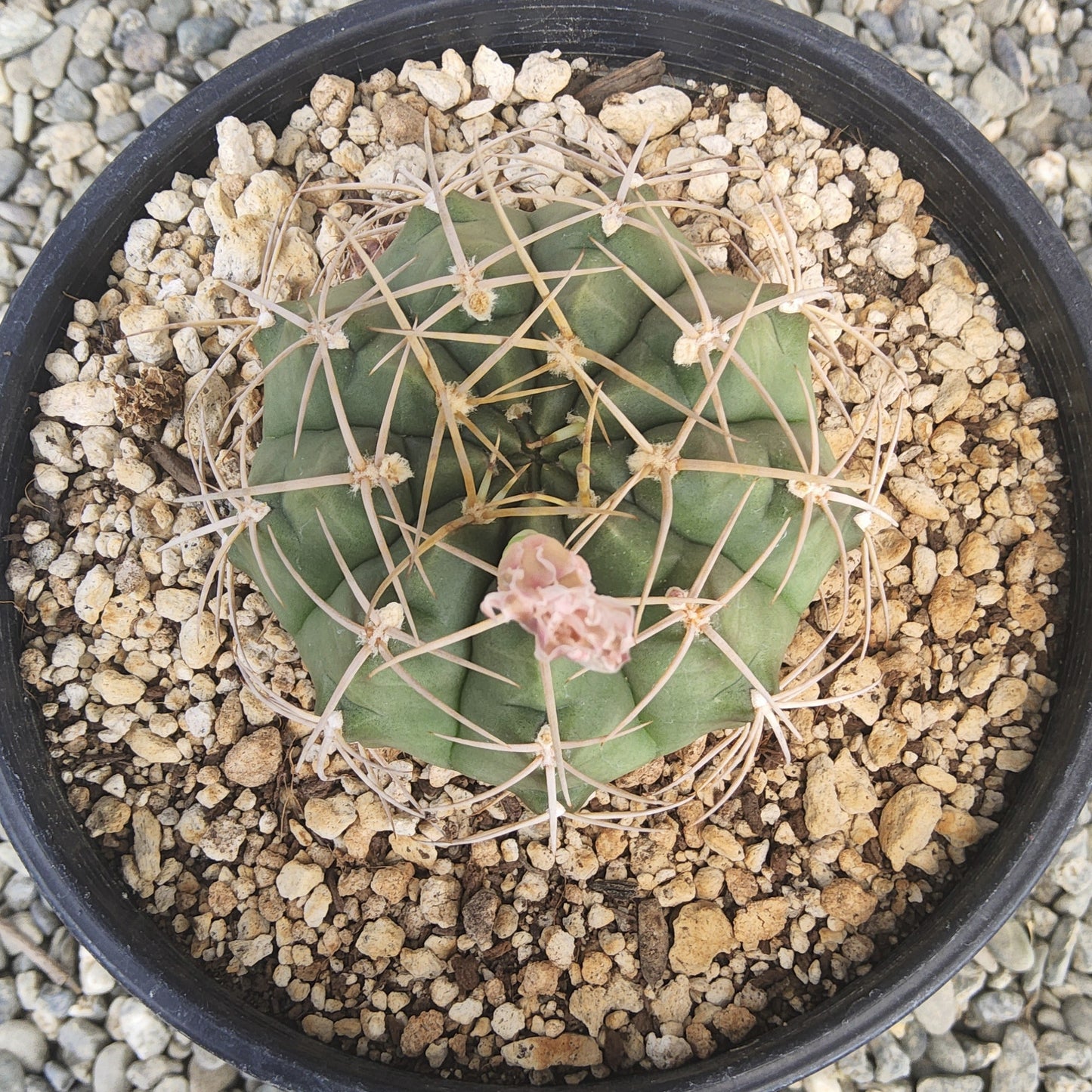
Gymnocalycium griseopallidum | Argentine Cactus | Collector Cactus | Flowering Cactus Growing in a Gallon
Gymnocalycium griseopallidum | Argentine Cactus | Collector Cactus | Flowering Cactus Growing in a Gallon
Couldn't load pickup availability
Gymnocalycium griseopallidum is a beautiful and understated species prized for its soft gray-green to bluish-green epidermis, broad rounded ribs, and elegant white to pale pink flowers. Unlike many heavily spined cacti, this species possesses relatively short, subdued spines that allow its attractive body coloration and symmetrical form to take center stage. As it matures, it develops into a solitary or slowly clustering cactus with a refined appearance that has earned it a place among the most desirable Argentine Gymnocalyciums.
Native to the dry interior of Argentina, Gymnocalycium griseopallidum has evolved to withstand intense sunlight, seasonal drought, and significant fluctuations in temperature. Its compact size, attractive coloration, and reliable flowering make it an outstanding addition to collections of South American cacti.
Native Habitat:
Gymnocalycium griseopallidum is endemic to Córdoba Province, Argentina, where it grows on rocky hillsides, open grasslands, and low mountain slopes at elevations of approximately 500–1,200 meters (1,640–3,940 feet). It is typically found rooted among granite-derived rocky soils and coarse mineral substrates, often growing beneath grasses and small shrubs that provide partial protection from the intense summer sun. The region experiences hot summers, cool winters, seasonal rainfall, and extended dry periods that have shaped the species' compact, drought-tolerant growth habit.
Flowering Information:
Mature plants flower from late spring through summer, producing elegant white to very pale pink flowers, often with a soft pink midstripe on the outer tepals. Like most members of the cactus family (Cactaceae), the flowers are hermaphroditic, possessing both functional stamens and a pistil within each flower. The blossoms are primarily pollinated by bees and other insects. Although the species is generally considered self-compatible, cross-pollination between genetically distinct plants typically results in improved seed production and greater genetic diversity.
Soil Type:
Grow in a sharply draining mineral substrate consisting of pumice, coarse sand, decomposed granite, fine gravel, and a modest amount of organic material. Excellent drainage is essential to maintain a healthy root system and prevent rot during cool or damp conditions.
Hardiness:
USDA Zones 8b–11. Mature plants tolerate brief periods of light frost when kept completely dry but should be protected from prolonged freezing temperatures and excessive winter moisture.
Light Requirements:
Thrives in bright light to full sun. In regions with extremely intense summer heat, light afternoon shade helps preserve the attractive gray-green epidermis while encouraging compact growth and abundant flowering.
Propagation:
Primarily propagated from seed, which produces vigorous plants displaying the full range of natural variation within the species. Mature specimens may occasionally produce offsets that can be removed and rooted after callusing. Seed-grown plants are preferred by collectors, producing the most natural growth form and preserving the species' genetic diversity.
Collector's Note:
The specific epithet griseopallidum translates to "pale gray," a reference to the species' distinctive gray-green epidermis that sets it apart from many other members of the genus. Although not as widely encountered in cultivation as species such as Gymnocalycium mihanovichii or G. baldianum, Gymnocalycium griseopallidum has become increasingly appreciated by collectors for its refined appearance, subtle coloration, and dependable flowering. Its restrained spination and beautifully symmetrical form exemplify the understated elegance for which many Argentine Gymnocalycium species are admired.
Any questions please ask.
#prsucculents
Share