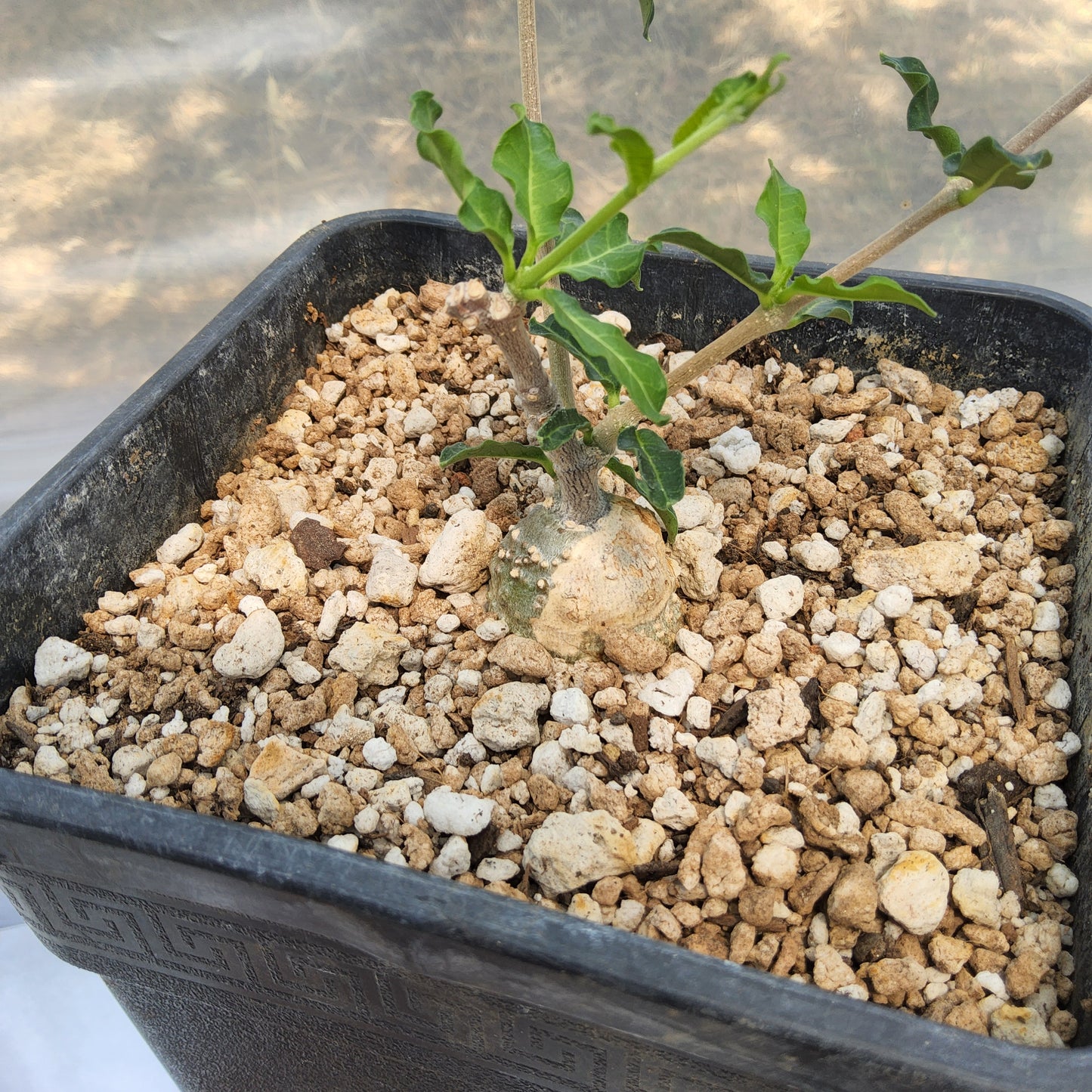
Fockea edulis | Hottentot Bread Vine | South African Caudiciform | Collector Succulent in a Gallon
Fockea edulis | Hottentot Bread Vine | South African Caudiciform | Collector Succulent in a Gallon
Couldn't load pickup availability
Fockea edulis is one of the most iconic caudiciform succulents in cultivation, admired for its massive swollen caudex, vigorous twining vines, and remarkable longevity. Native to the semi-arid regions of southern Africa, this fascinating member of the Apocynaceae family stores water within its enlarged underground stem, allowing it to survive prolonged periods of drought. As plants mature, the caudex gradually expands into an impressive sculptural form, making each specimen unique and highly prized among collectors of caudiciforms.
Whether grown with its caudex exposed as a living sculpture or allowed to develop naturally below the soil surface, Fockea edulis is an exceptionally rewarding species. During the growing season, it produces slender climbing vines adorned with glossy green leaves that can be trained onto supports or pruned to maintain a compact, bonsai-like appearance.
Native Habitat:
Fockea edulis is native to South Africa, extending into southern Namibia, where it inhabits the Eastern Cape, Western Cape, Northern Cape, and parts of the Karoo biome. It grows on rocky hillsides, quartz and shale-derived slopes, open scrubland, and well-drained sandy or gravelly soils from near sea level to approximately 1,200 meters (3,940 feet). Plants are often partially buried beneath the soil surface, with only the upper portion of the caudex exposed. These habitats experience hot, dry summers, cool winters, and highly variable rainfall depending on locality, ranging from winter-rainfall Mediterranean climates in the southwest to summer-rainfall semi-arid regions farther east.
Flowering Information:
Mature plants produce clusters of small, greenish-white to cream-colored flowers during late spring through summer. Although individually inconspicuous, the lightly fragrant flowers attract a variety of small insect pollinators. As a dioecious species, male and female flowers are borne on separate plants, meaning both sexes are required for seed production.
Soil Type:
Requires an exceptionally fast-draining mineral substrate consisting of pumice, coarse sand, crushed granite, gravel, and a modest amount of organic material. The caudex should never remain in consistently wet soil, and excellent drainage is essential for long-term health.
Hardiness:
USDA Zones 9b–11. Mature plants can tolerate brief temperatures to approximately 28°F (-2°C) if kept completely dry, but should be protected from prolonged frost and excessive winter moisture. In cooler climates, a dry winter dormancy is recommended.
Light Requirements:
Thrives in bright light to full sun. Mature caudices develop the best form and coloration under strong light, while the climbing vines appreciate good air circulation and can benefit from light afternoon shade in extremely hot climates.
Propagation:
Primarily propagated from seed, producing plants that develop the characteristic swollen caudex prized by collectors. Stem cuttings root readily but generally do not form the large, naturally developed caudex characteristic of seed-grown specimens, making seed propagation the preferred method for collector-quality plants.
Collector's Note:
The specific epithet edulis means "edible," referring to the large underground tuber, which has historically been used as an emergency food source by indigenous peoples after careful preparation. Despite its common name, Hottentot Bread, the raw tuber contains milky latex and should not be consumed! Fockea edulis is one of the best-known caudiciforms in cultivation, valued for its extraordinary longevity, sculptural caudex, and adaptability to container culture. Over decades, seed-grown specimens can develop into remarkable living sculptures that become increasingly impressive with age, making this species a cornerstone of serious caudiciform collections.
Share