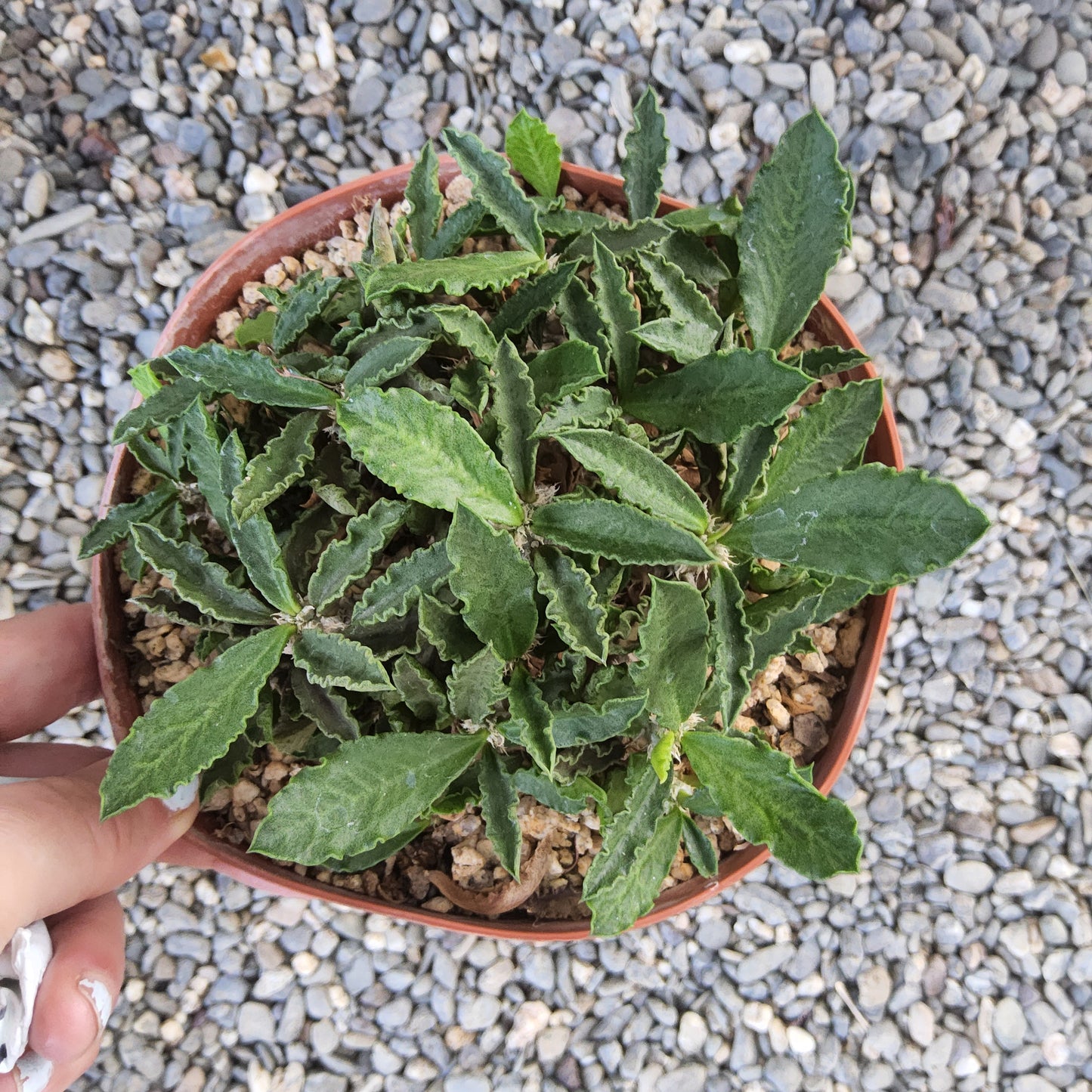
Euphorbia decaryi | Madagascar Spiny Succulent | Caudiciform Euphorbia | Collector Succulent in 6 Inch
Euphorbia decaryi | Madagascar Spiny Succulent | Caudiciform Euphorbia | Collector Succulent in 6 Inch
Couldn't load pickup availability
Euphorbia decaryi is one of Madagascar's most distinctive succulent species, admired for its low-growing, sculptural habit, intricately twisted stems, and beautifully undulating leaf margins. Unlike the tall, columnar Euphorbias often associated with the genus, this compact species forms dense mats of branching stems that gradually spread to create a striking architectural display. Its combination of unusual foliage, colorful stems, and exceptional drought tolerance has made it a favorite among collectors of Madagascan succulents.
The slender, zigzag stems are adorned with small, wavy-edged leaves that range from bright green to gray-green, often developing attractive shades of bronze, purple, or reddish hues when exposed to strong light or cooler temperatures. As the plant matures, its intricate branching pattern becomes increasingly complex, creating a living sculpture that changes with every growing season.
Native Habitat:
Euphorbia decaryi is endemic to southern Madagascar, where it occurs primarily in the Toliara (Tuléar) region and surrounding areas of the island's spiny forests and dry deciduous woodlands. It grows on limestone outcrops, rocky hillsides, and well-drained sandy or calcareous soils, often alongside Didierea, Alluaudia, Pachypodium, Adenia, and other drought-adapted species unique to Madagascar. The climate is characterized by intense sunlight, high temperatures, low annual rainfall, and a pronounced dry season, conditions that have shaped its compact, water-efficient growth habit.
Flowering Information:
During the growing season, mature plants produce small yellow to yellow-green cyathia near the tips of the stems. Euphorbia decaryi is dioecious, meaning each individual plant is either male or female. Male plants produce pollen-bearing flowers, while female plants produce seed-bearing flowers that develop into distinctive three-lobed seed capsules after successful pollination. Because the species is dioecious, both a male and a female plant are required for seed production, and the plants must flower at the same time. A plant's sex cannot be determined until it blooms.
Soil Type:
Provide an exceptionally fast-draining mineral substrate consisting of pumice, coarse sand, decomposed granite, crushed limestone, and fine gravel, with very little organic material. Excellent drainage is essential to prevent root rot and maintain healthy growth.
Hardiness:
USDA Zones 10–12. Protect from frost and prolonged temperatures below approximately 40°F (4°C). During cooler weather, reduce watering and allow the soil to dry completely between irrigations.
Light Requirements:
Thrives in bright light to full sun. Bright conditions encourage compact growth, vivid stem coloration, and healthy leaf development. In extremely hot climates, light afternoon shade can help prevent stress while maintaining excellent color.
Propagation:
Euphorbia decaryi can be propagated from both seed and stem cuttings. Seed-grown plants are preferred by collectors because they develop the species' characteristic swollen underground rootstock (caudex), giving mature specimens their natural growth form. Stem cuttings root readily and are an excellent way to preserve desirable clones, but they generally do not develop the pronounced caudex found in seed-grown plants. As with all Euphorbias, the milky white latex can irritate the skin and eyes and should be handled with care.
Collector's Note:
Euphorbia decaryi was named in honor of the French botanist and explorer Raymond Decary, whose extensive work greatly expanded our understanding of Madagascar's remarkable flora. Several naturally occurring forms and subspecies have been described—including plants with particularly curled foliage or more compact growth habits—and these remain highly sought after by collectors. The species' dioecious nature makes flowering specimens especially interesting, as growers often seek both male and female plants for controlled pollination and seed production. Although compact in stature, Euphorbia decaryi is one of the most distinctive Madagascan Euphorbias in cultivation, combining unusual foliage, intricate branching, and exceptional adaptability into a species that becomes increasingly beautiful with age. Its sculptural form and seasonal color changes make it an outstanding addition to any serious collection of Madagascan succulents and caudiciform plants.
This is for one plant similar to the one shown growing in a 6" inch container shipped bare root. All of our plants are guaranteed pest-free and healthy upon delivery, and we ship within the United States. Shipping is done Monday thru Friday.
Any questions please ask.
#prsucculents
Share