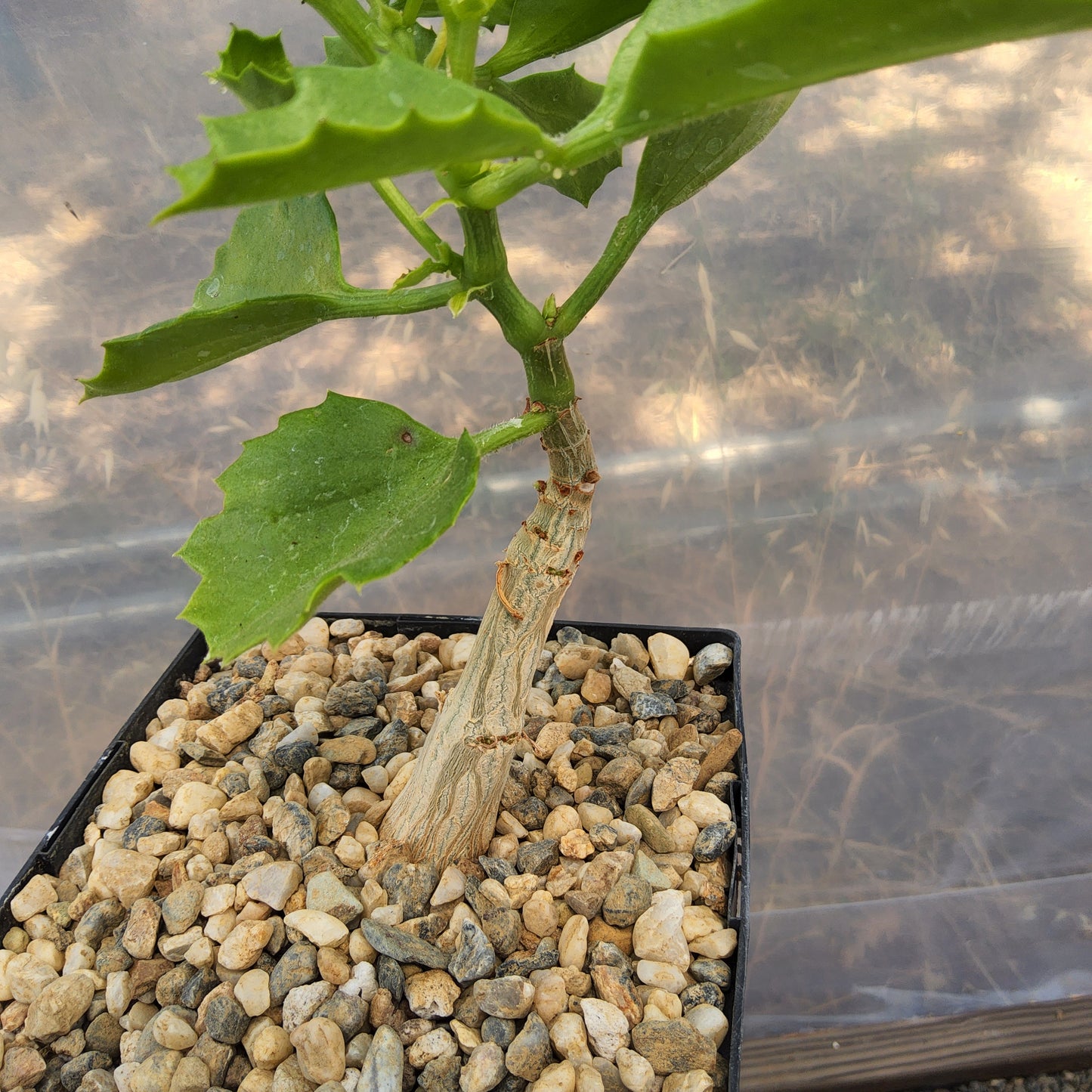
Cyphostemma cirrhosum | South African Caudiciform | Collector Succulent | Pachycaul Plant Growing in a Gallon
Cyphostemma cirrhosum | South African Caudiciform | Collector Succulent | Pachycaul Plant Growing in a Gallon
Couldn't load pickup availability
Cyphostemma cirrhosum is a remarkable caudiciform vine prized for its swollen trunk, sculptural branching, and attractive seasonal foliage. A member of the grape family (Vitaceae), this distinctive species develops a thick, water-storing caudex that supports vigorous climbing stems equipped with slender tendrils. As plants mature, the contrast between the rugged, corky caudex and the lush green leaves creates an appearance unlike almost any other succulent, making it a favorite among collectors of caudiciforms and pachycauls.
Adapted to the dry landscapes of southern Africa, Cyphostemma cirrhosum follows a pronounced seasonal growth cycle. During the growing season, it produces lush foliage and climbing stems, while cooler or drier conditions trigger dormancy and leaf drop. Given patience, this species develops into a dramatic living sculpture that becomes increasingly impressive with age.
Native Habitat:
Native to the Northern Cape and Western Cape provinces of South Africa, extending into southern Namibia, where it grows throughout the Succulent Karoo and adjacent Nama Karoo biomes. It inhabits rocky quartz fields, granite outcrops, shale hillsides, and gravelly slopes in exceptionally well-drained mineral soils from near sea level to approximately 1,200 meters (3,940 feet). Plants are often found scrambling through low shrubs or over exposed rocks in habitats characterized by low annual rainfall, intense sunlight, cool winters, and prolonged periods of drought.
Flowering Information:
Mature plants produce clusters of small greenish-yellow flowers during late spring through summer. While individually modest, the flowers are attractive to a variety of native pollinating insects and are followed by small, fleshy berries that ripen to shades of red, purple, or nearly black, providing seasonal ornamental interest.
Soil Type:
Requires an exceptionally fast-draining mineral substrate composed of pumice, coarse sand, crushed granite, gravel, and only a small amount of organic material. Replicating its naturally rocky habitat is essential for maintaining a healthy caudex and preventing root rot.
Hardiness:
USDA Zones 9b–11. Mature plants can tolerate brief temperatures near 28°F (-2°C) when completely dry but should be protected from prolonged frost and excessive winter moisture. A dry winter dormancy promotes healthy seasonal growth.
Light Requirements:
Thrives in full sun to bright filtered light. Strong light encourages compact caudex development, sturdy branching, and healthy foliage. In extremely hot inland climates, light afternoon shade can help prevent leaf scorch during peak summer temperatures.
Propagation:
Primarily propagated from seed, producing plants with the most attractive naturally developed caudex. Stem cuttings root readily but generally produce a less pronounced caudex than seed-grown specimens. Providing a climbing support during the growing season encourages vigorous, natural growth.
Collector's Note:
The specific epithet cirrhosum refers to the plant's characteristic tendrils (cirri), which allow it to climb through surrounding vegetation in habitat. Unlike the massive pachycaul Cyphostemma juttae, C. cirrhosum develops a climbing growth habit while still forming an impressive water-storing caudex. This combination of climbing vine and sculptural trunk makes it one of the most distinctive members of the genus and a highly desirable addition to collections of African caudiciforms.
This is for one plant similar to the one shown growing in a 1 gallon container shipped bare root. All of our plants are guaranteed pest-free and healthy upon delivery, and we ship within the United States. Shipping is done Monday thru Friday.
Any questions please ask.
#prsucculents
Share