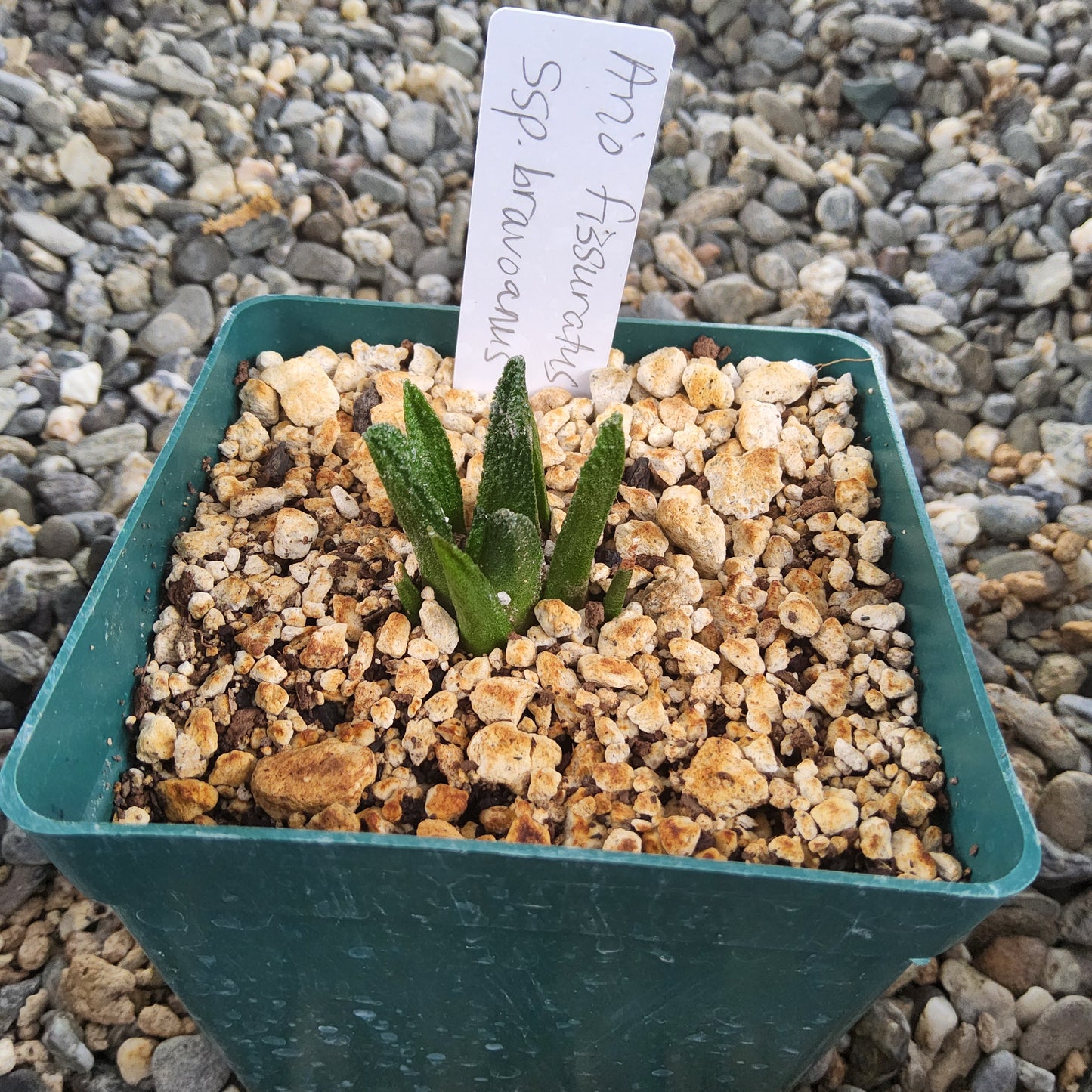
Ariocarpus bravoanus | Ariocarpus fissuratus ssp. bravoanus | San Luis Potosí Collector Cactus Growing in 4 Inch
Ariocarpus bravoanus | Ariocarpus fissuratus ssp. bravoanus | San Luis Potosí Collector Cactus Growing in 4 Inch
Couldn't load pickup availability
Ariocarpus bravoanus, long known in cultivation as Ariocarpus fissuratus ssp. bravoanus, is an extraordinary geophytic cactus endemic to a highly localized region of San Luis Potosí, Mexico. Its deeply depressed body remains almost level with the surrounding soil, forming a compact rosette of olive-green to gray-green triangular tubercles. Mature tubercles develop a distinctive textured surface and may form shallow lateral furrows, giving older specimens an increasingly intricate appearance.
Unlike the heavily fissured tubercles of typical Ariocarpus fissuratus, A. bravoanus combines a central woolly areole with irregularly papillose tubercle surfaces and only partially developed furrows. This unusual combination of characteristics contributed to the long-running debate over its relationship to other members of the genus and makes it one of the most botanically interesting Ariocarpus species in cultivation.
Native Habitat:
Ariocarpus bravoanus is endemic to San Luis Potosí, Mexico, where it occurs in a small and fragmented series of populations at approximately 1,500–2,000 meters (4,920–6,560 feet) elevation. The original type collection was made in the municipality of Guadalcázar at approximately 1,540 meters.
Plants inhabit flat, gravelly plains of limestone origin within microphyllous desert scrub, frequently growing among creosote bush (Larrea). Plants recorded with the original population included Agave, Hechtia, Yucca, and Calliandra eriophylla. The body sits extremely low in the substrate, and during prolonged dry periods mature specimens can contract until much of the plant is nearly flush with or below the surrounding gravel, providing remarkable camouflage and protection from drought.
Flowering Information:
Mature plants produce elegant flowers from the woolly center of the rosette, generally during autumn. The flowers reach approximately 2.5 cm (1 inch) long, with cream-colored outer tepals and pinkish-magenta inner tepals, white filaments, yellow anthers, and a prominent white style.
The flowers are hermaphroditic, containing functional stamens and a functional pistil.
Soil Type:
Grow in a highly porous, predominantly mineral substrate that reflects its native limestone-gravel habitat. An appropriate mixture can include pumice, coarse limestone gravel, decomposed limestone, coarse grit, and only a small amount of organic material.
Excellent drainage is critical. Ariocarpus bravoanus is particularly sensitive to prolonged moisture around its root system, especially during cool weather. A deep container is preferable to accommodate the substantial storage root and allow the plant to develop its characteristic low, natural growth form.
Hardiness:
Best suited to approximately USDA Zones 9–11 for outdoor cultivation. Established plants can tolerate cool winter conditions and brief light frost when the substrate is completely dry, but prolonged freezing temperatures combined with moisture should be avoided.
Provide a cool, completely dry winter dormancy, with watering resumed gradually as temperatures rise and active growth begins. Winter moisture presents a considerably greater risk than cool temperatures alone.
Light Requirements:
Thrives in bright light to strong filtered sun, with several hours of direct sunlight encouraging compact, naturally flattened growth. Plants grown with insufficient light may become unnaturally elevated and lose the characteristic habitat-like form.
In extremely hot climates, some protection from intense afternoon sun is beneficial, particularly for greenhouse-grown specimens that have not been gradually acclimated.
Propagation:
Propagation is primarily from seed, which is strongly preferred for producing naturally proportioned specimens with well-developed root systems. Seedlings grow slowly and should initially receive protection from excessive sunlight and severe drying.
Grafting can be used to accelerate growth and flowering, but grafted specimens frequently develop a more inflated and elevated appearance than plants grown naturally on their own roots. For collectors seeking the characteristic compact, geophytic form of the species, seed-grown plants on their own roots are generally preferred.
Collector's Note:
Ariocarpus bravoanus was formally described in 1992 by Héctor M. Hernández and Edward F. Anderson following fieldwork associated with a project documenting Mexican cacti. The holotype was collected in Guadalcázar, San Luis Potosí, on August 19, 1991, at approximately 1,540 meters elevation. The authors deliberately withheld the precise locality in their publication because of concern that such a restricted population could be threatened by illegal collecting.
The species was named in honor of the distinguished Mexican botanist Dr. Helia Bravo Hollis, whose pioneering research made major contributions to the study of Mexican Cactaceae. The original authors considered the plant morphologically unusual because it combined characteristics historically associated with different groups within Ariocarpus. Younger plants possess relatively smooth, elongated tubercles, while older specimens may develop lateral fissures that suggest an affinity with the fissuratus group.
This relationship led to the later combination Ariocarpus fissuratus ssp. bravoanus, published in 1999, and that name remains familiar among collectors. Kew's Plants of the World Online currently accepts Ariocarpus bravoanus as a distinct species, however, and treats Ariocarpus fissuratus ssp. bravoanus as a synonym.
Wild populations are highly localized and fragmented, and the species is currently assessed as Endangered, reinforcing the importance of responsibly propagated, seed-grown material in cultivation.
This is for one plant similar to the one shown growing in a 4" inch container shipped bare root. All of our plants are guaranteed pest-free and healthy upon delivery, and we ship within the United States. Shipping is done Monday thru Friday.
Any questions please ask.
#prsucculents
Share