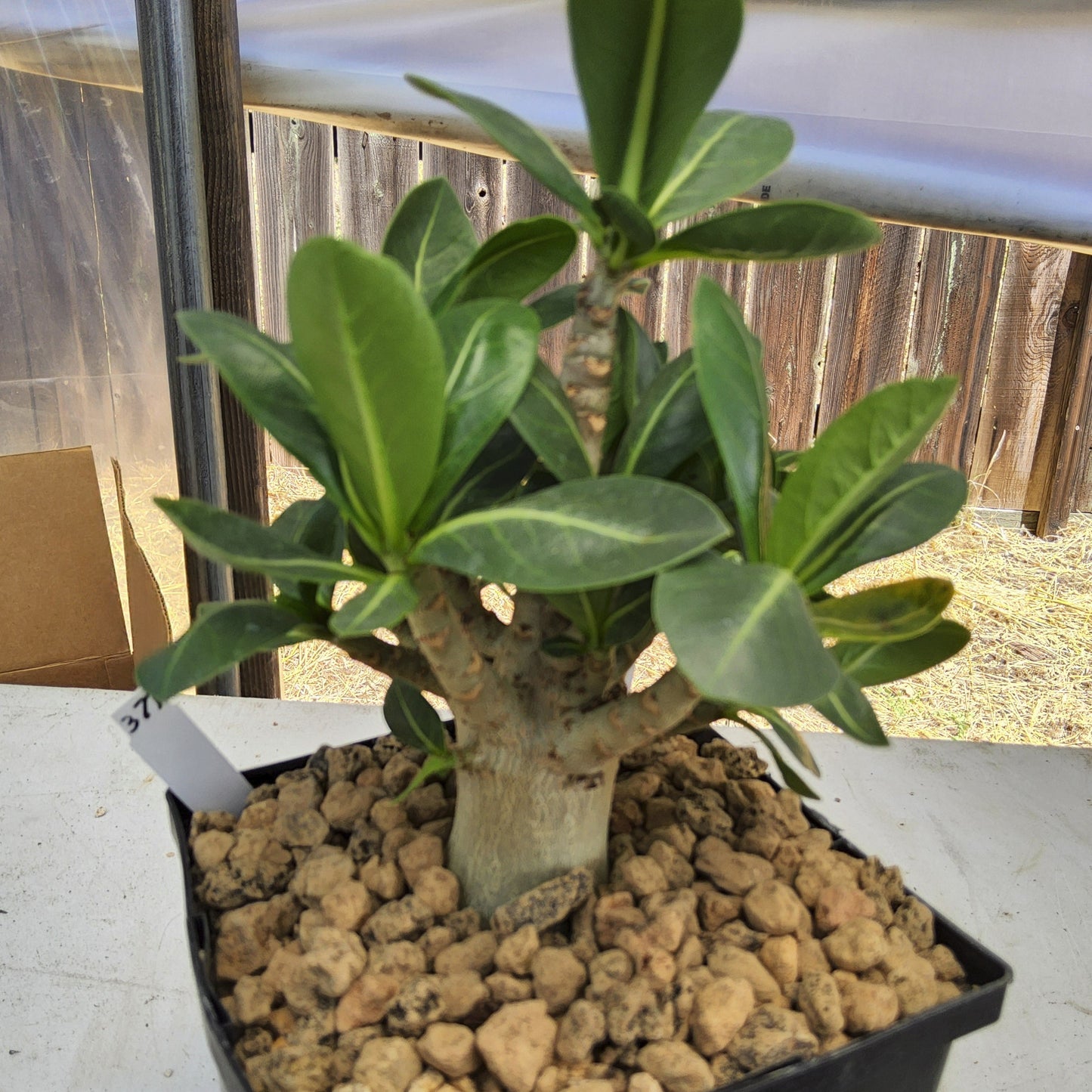
Adenium arabicum × somalense | Desert Rose Hybrid | Caudiciform Succulent | Collector Adenium Growing in 1 Gallon
Adenium arabicum × somalense | Desert Rose Hybrid | Caudiciform Succulent | Collector Adenium Growing in 1 Gallon
Couldn't load pickup availability
Adenium arabicum × somalense is a superb hybrid that combines the massive, sculptural caudex of Adenium arabicum with the elegant branching, vigorous growth, and floriferous nature of Adenium somalense. The result is a striking Desert Rose that develops a broad, characterful trunk while producing an abundance of colorful trumpet-shaped flowers. Each seed-grown plant expresses a unique blend of parental traits, making every specimen an individual work of living art.
Highly prized by collectors and bonsai enthusiasts alike, this hybrid offers the rugged architecture of A. arabicum with the refined branching and graceful silhouette inherited from A. somalense. Given proper care and time, plants develop impressive exposed caudices that become increasingly sculptural with age.
Native Habitat:
Adenium arabicum × somalense is a horticultural hybrid and does not occur naturally in the wild. Its parent species are native to two distinct regions of the Arabian Peninsula and the Horn of Africa. Adenium arabicum is indigenous to the southwestern Arabian Peninsula, particularly Saudi Arabia and Yemen, where it grows on rocky volcanic slopes, basalt plateaus, and arid mountain valleys. Adenium somalense is native to Somalia, extending into parts of eastern Ethiopia and northeastern Kenya, where it inhabits dry savannas, rocky hillsides, limestone outcrops, and well-drained sandy soils. Both species have evolved in climates characterized by intense sunlight, seasonal rainfall, and prolonged drought, making this hybrid exceptionally well adapted to warm, dry growing conditions.
Flowering Information:
Mature plants flower from late spring through autumn, often producing repeated flushes of large, trumpet-shaped blooms throughout the growing season. Flower color varies among individual seedlings but commonly includes shades of pink, rose, crimson, or deep magenta, frequently accented by lighter throats or contrasting margins. With excellent culture, mature specimens can bloom several times each year.
Soil Type:
Requires a fast-draining mineral substrate composed of pumice, coarse sand, decomposed granite, fine gravel, and a modest amount of organic material. Excellent drainage is essential to maintain a healthy caudex and prevent root rot. Allow the soil to dry between waterings during active growth.
Hardiness:
USDA Zones 10–12. This hybrid is not frost tolerant and should be protected from temperatures below approximately 45°F (7°C). During winter dormancy, reduce watering significantly while maintaining warm, bright conditions.
Light Requirements:
Thrives in full sun to bright filtered light. Strong sunlight promotes compact branching, vigorous caudex development, abundant flowering, and sturdy growth. In extremely hot desert climates, light afternoon shade can help protect foliage while maintaining excellent performance.
Propagation:
Primarily propagated from seed, producing plants with a wide range of attractive characteristics inherited from both parents. Because each seedling is genetically unique, individual plants vary in caudex shape, branching habit, flower color, and overall growth form. Exceptional clones may also be propagated by grafting to preserve desirable characteristics.
Collector's Note:
Adenium arabicum × somalense is one of the most successful and widely appreciated Desert Rose hybrids. It combines two species that are valued for complementary qualities—A. arabicum for its broad, powerful caudex and compact stature, and A. somalense for its elegant branching, rapid growth, and prolific flowering. The resulting hybrid often displays exceptional vigor while maintaining the sculptural appearance that has made Adeniums favorites among caudiciform collectors and bonsai enthusiasts. Because every seed-grown plant expresses a unique combination of parental genetics, no two specimens are exactly alike, ensuring each mature plant develops its own distinctive character.
Share